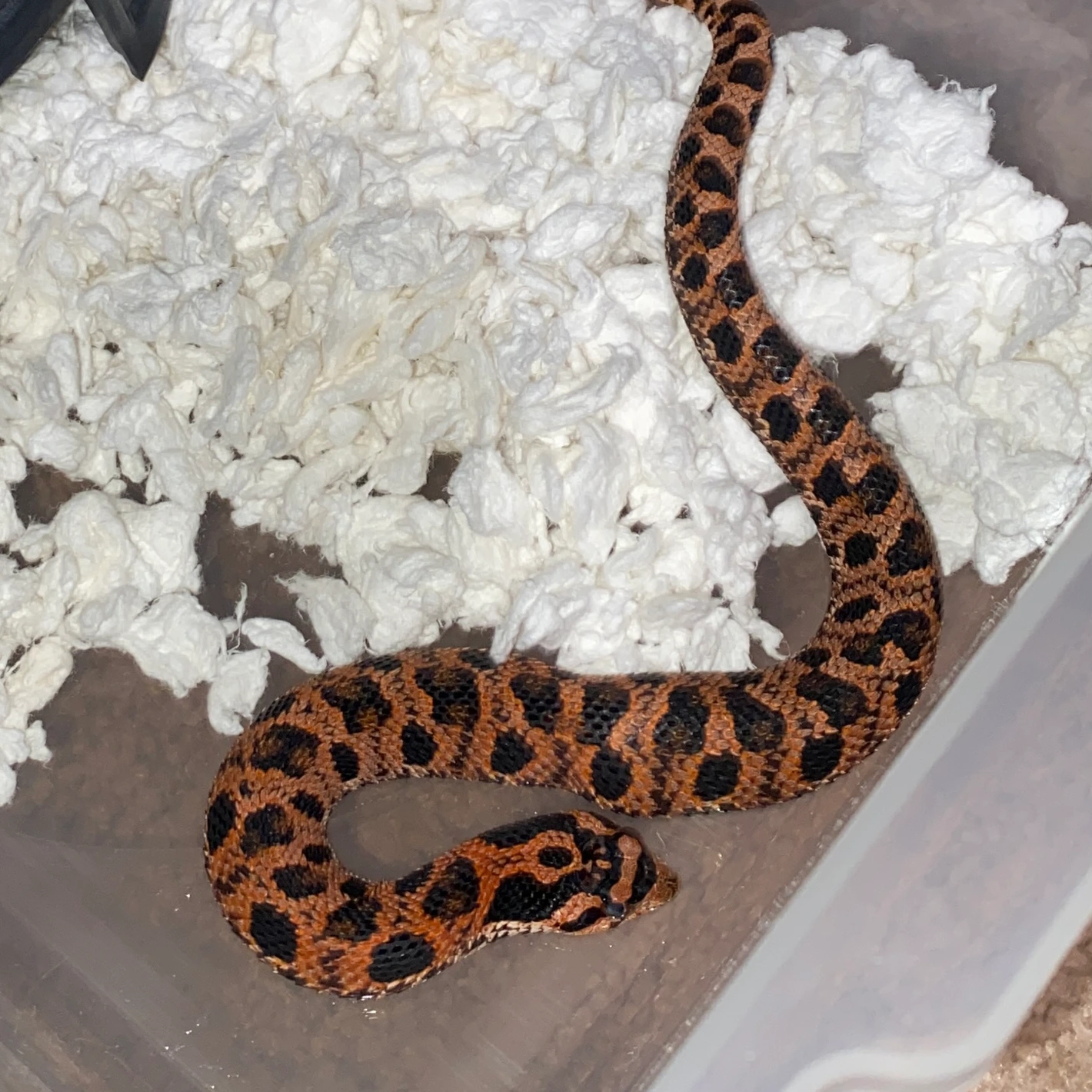
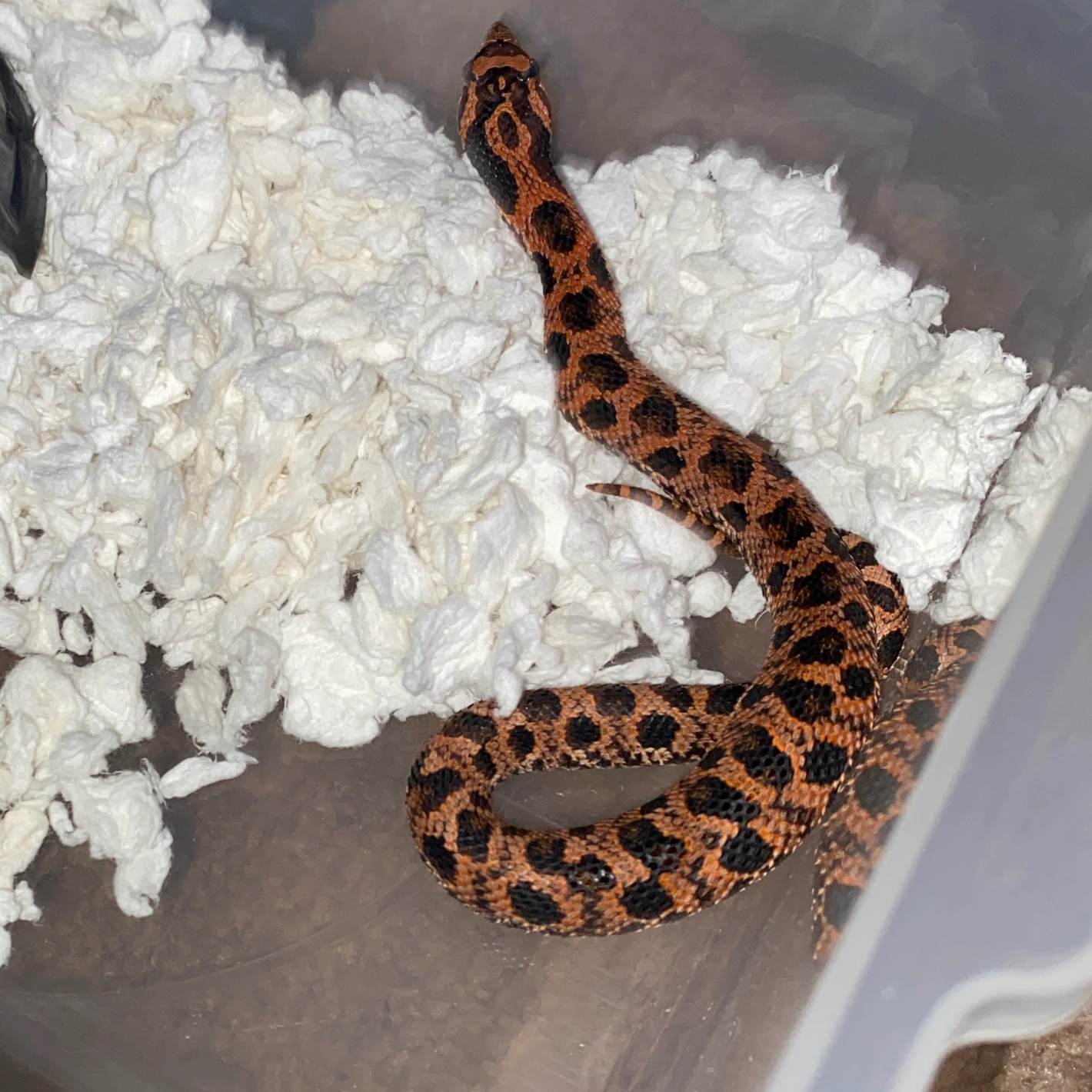
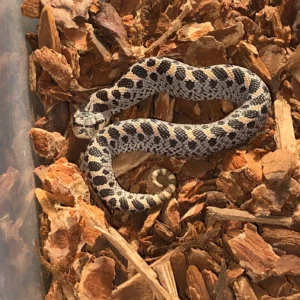
Finding the perfect Eastern Hognose snake baby for sale requires a balance of quality genetics and expert husbandry. As a breeder, I know that while Westerns are common, the Eastern Hognose (Heterodon platirhinos) is the crown jewel for keepers who appreciate dramatic displays and unique feeding specializations.
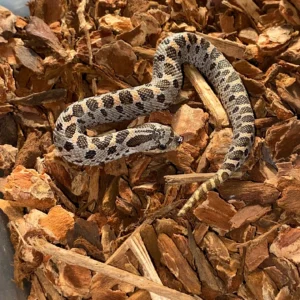
Captive Bred eastern hognose snake baby For Sale
Known by some as a “Puff Adder,” the Eastern Hognose (Heterodon platirhinos) is a fascinating snake species. Unlike some other species, the Eastern Hognose is famous for its upturned snout and incredible defensive “acting,” which includes hooding up like a cobra or playing dead.
- Size: Adult males typically range from 15-20 inches, while females can reach up to 30 inches.
- Dietary Needs: While they are amphibian specialists in the wild, many captive bred hognose snakes are successfully transitioned to scented pinky mice.
- Lifespan: With proper care, these snakes can thrive for up to 15–20 years.
Essential Care & Supplies For Eastern hognose snake baby
To help an eastern hognose snake baby thrive, a bioactive setup with deep, sandy substrate for burrowing is recommended.
- Enclosure: Start babies in a 20-gallon long tank; adults benefit from a 40-gallon breeder.
- Temperature: Provide a basking spot of 86–88°F and a cool side around 70–75°F.
- Humidity: Maintain 50–60% humidity to support healthy shedding.
Price Points for Eastern Hognoses
Because they are more challenging to breed and establish than Westerns, captive bred eastern hognose snake baby typically command a higher price.
- Normal/Wild Type: Usually starts between $399 and $599 for established juveniles.
- Specialty Morphs: Rare variations like Axanthic or high-expression Orange can range from $600 to $1,500+ depending on age and lineage.
Overcoming the “Picky Eater” Reputation
The biggest hurdle for any eastern hognose snake baby for sale is their specialized diet. In the wild, they are toad specialists, but quality breeders ensure their captive bred hognose snakes are “mouse-scented” or transitioned to unscented pinkies.
- Feeding Strategy: If a baby is finicky, use Amphibian Scenting Liquid to trick their powerful olfactory senses.
- Alternative Feeders: For stubborn eaters, Reptilinks (frog-based links) are an excellent whole-prey alternative that provides natural nutrition without the hassle of keeping live toads.
The Ultimate Bioactive Setup
A captive eastern hognose snake baby thrives best when it can perform its natural behaviors—specifically burrowing.
- Substrate: Use a mix of 70% topsoil and 30% play sand. Brands like The Bio Dude Terra Firma
are perfect for holding tunnels.
- Humidity & Hydration: Unlike Westerns, Easterns prefer slightly higher humidity (50–60%). Use a Digital Hygrometer to ensure levels don’t drop too low, which can lead to stuck sheds.
- Mental Enrichment: Include “clutter” like Cork Rounds and leaf litter. Despite being “fossorial” (burrowing), many keepers report their Easterns enjoy climbing low branches.
Breeder Tip: The “Zombie Snake” Defense
When selling to new keepers, always mention their theatrical defense mechanisms. If they feel threatened, they may “hood up” like a cobra, hiss, or even roll over and “play dead” (complete with a hanging tongue). This is a harmless bluff and one of the most rewarding behaviors to witness in a pet snake.
While the Western Hognose (Heterodon nasicus) dominates the market with hundreds of genetic mutations, the eastern hognose snake baby (Heterodon platirhinos) niche is focused more on striking natural color phases and a few emerging genetic morphs.
Because they are highly variable in the wild, many “morphs” are actually locality-specific colorations rather than laboratory-bred mutations.
Primary eastern hognose snake baby Morphs & Phases
- Melanistic (Black Phase): One of the most sought-after looks, these individuals are solid black or very dark charcoal with little to no visible pattern.
- Axanthic: A recessive mutation that removes red and yellow pigments, resulting in a high-contrast snake with shades of white, grey, and black.
- Albino: A classic recessive trait that removes melanin, leaving behind bright red, orange, and yellow tones with distinctive red eyes.
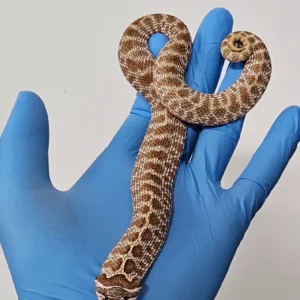
- Extreme Red / Orange Phase: These are typically high-expression color phases rather than a single gene. They feature intense fiery reds or deep oranges that cover the dorsal blotches and sides.
- Hypo (Hypomelanistic): These snakes have a significant reduction in black pigment, which makes their other colors (like tan or peach) appear much more “washed out” and pastel.
- Patternless / Solid: Similar to the melanistic phase, these can occur in other colors like olive or grey, where the typical blotched pattern is completely absent.
Advanced Genetic Combinations
For collectors looking for rare captive bred hognose snakes, breeders have begun combining traits to create high-end “designer” Easterns:
- Snowburst: A rare and stunning combination of Sable, Albino, and Axanthic. It produces a translucent pink snake with almost no visible pattern.
- Stormcloud: A mix of Sable and Axanthic, creating a “cool” aesthetic with blue-to-grey base tones that darken into deep browns or blacks as the snake matures.
- Pink Punch: A combination of Toffeebelly and Superarctic, resulting in a brownish-purple hue with striking dark red eyes.
Choosing the Right Morph
When browsing an Eastern Hognose for sale, remember that color phases (like Red or Green) can be just as visually impressive as genetic morphs (like Albino). If you want a snake that stays dark and “moody,” look for a Melanistic or Sable lineage. If you want a high-visibility display animal, the Albino or Extreme Red phases are your best bet.
Key physical differences between Eastern and Western hognose snakes
While both belong to the genus Heterodon, the Eastern Hognose (H. platirhinos) and Western Hognose (H. nasicus) have distinct physical traits that make identification straightforward for a trained eye.
- Snout Shape: The Western Hognose has a significantly more strongly upturned, pointed snout compared to the straighter, flatter nose scale of the Eastern.
- Ventral (Belly) Coloration: A key diagnostic feature is the tail’s underside. In Western Hognoses, the underside of the tail is nearly all black and matches the heavily pigmented belly. In Eastern Hognoses, the underside of the tail is much lighter in color than the rest of the belly.
- Body Size: Eastern Hognoses generally grow larger and stouter, with record lengths exceeding 45 inches, whereas Westerns are typically slightly smaller, averaging around 1.5 to 3 feet.
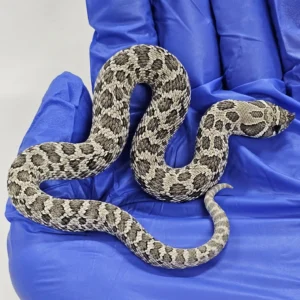
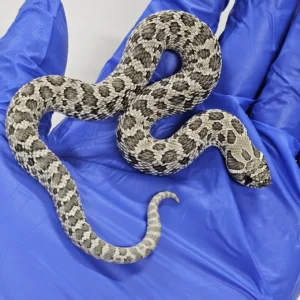
- Color Variability: Easterns are highly variable in the wild, appearing in red, orange, yellow, and even solid black (melanistic) phases. Westerns naturally feature a more consistent tan or light brown base with dark spots, though captive breeding has introduced many artificial morphs.
- Head Markings: The Eastern Hognose often features large black “ear” blotches behind the head. Westerns typically have face stripes that transition into spots along the body.
Reviews
There are no reviews yet.